
A successful rebrand is more than a new logo or a fresh colour palette; it's a strategic pivot that realigns a company with its audience, market reality, and future ambitions. It’s a bold declaration of evolution, often born from crisis, ambition, or the simple, urgent need to stay relevant in a competitive marketplace. But how do you know when a minor refresh is insufficient and a complete overhaul is necessary? This deep dive moves beyond theory to explore some of the most successful rebranding examples, dissecting the 'why' and 'how' behind their remarkable transformations.
We will unpack the specific challenges market leaders faced, the precise strategies they deployed, and the measurable results they achieved. From heritage brands like Old Spice capturing the attention of a new generation to tech giants like Apple redefining their core purpose, these case studies offer a masterclass in brand revitalisation. Each example is broken down into actionable insights and replicable methods applicable to start-ups, established corporations, and e-commerce businesses alike. You will gain a clear understanding of the strategic thinking required to turn a brand identity into a powerful growth engine.
For businesses looking to manage their revitalised social media presence efficiently, tools like Posterly, a product from Grassroots Creative Agency, can be instrumental in scheduling and publishing content across multiple platforms, ensuring your new brand message is delivered consistently. This curated collection will illustrate how a well-executed rebrand, supported by the right tools, can become a catalyst for unprecedented growth and lasting market leadership.
1. Apple Inc. – From Computer Manufacturer to Tech Lifestyle Brand
In 1997, Apple was on the brink of collapse. Its brand was diluted, its product line was confusing, and it was seen merely as a computer manufacturer in a market dominated by PCs. The return of Steve Jobs triggered one of the most famous and successful rebranding examples in history, transforming Apple from a niche tech company into a global lifestyle phenomenon. The strategy wasn't just about a new look; it was a fundamental shift in corporate identity, product philosophy, and marketing communication.
This rebrand centred on simplifying everything. Apple slashed its bloated product line to focus on just four core products. The colourful, friendly rainbow logo was replaced with a sleek, monochromatic apple, signalling a move towards sophistication and modernism. The "Think Different" campaign launched, shifting the marketing narrative from technical specifications to the creative, rebellious spirit of its users.
Strategic Breakdown and Results
The core of Apple's success was aligning its brand promise with a radically improved user experience. Products like the iPod, iPhone, and MacBook were not just functional; they were beautiful, intuitive, and seamlessly integrated into a user's life. This created a powerful emotional connection.
- Brand Simplification: The new logo and focused product line made the brand instantly recognisable and premium.
- Emotional Storytelling: The "Think Different" campaign sold an identity, not just a computer. It associated Apple with geniuses and innovators.
- Experiential Retail: The launch of Apple Stores created a physical space where customers could experience the brand's premium, user-centric ethos firsthand.
The results were astronomical. Apple's stock price surged, and it became the world's most valuable company. The rebrand saved it from bankruptcy and established it as a leader in design and innovation, a position it maintains today.
Key Takeaways for Your Brand
Apple's journey provides a masterclass in transformational rebranding.
Key Insight: A successful rebrand must be more than cosmetic. It needs to be rooted in a genuine improvement of your products, services, and core company vision.
To replicate this success, focus on:
- Align Brand with Product: Ensure your visual identity and messaging accurately reflect the quality and experience of what you offer.
- Sell an Emotion, Not a Feature: Connect with your audience by telling a story about who they can become with your brand.
- Invest in Consistency: Maintain a cohesive brand experience across all touchpoints, from your website to your social media channels. Using a tool like Posterly can help maintain this consistency in your digital content.
This case shows why a deep, strategic approach is crucial when you're considering a change. For a detailed guide on navigating this process, explore our complete overview on rebranding a business.
2. Old Spice – From Outdated Aftershave to Digital Icon
By the late 2000s, Old Spice was a brand associated with grandfathers. Owned by Procter & Gamble, its sales were stagnant, and its image was hopelessly outdated in a market increasingly dominated by slick competitors like Axe. The brand needed a radical overhaul to connect with a younger audience without alienating its existing customer base. This challenge led to one of the most celebrated and successful rebranding examples of the digital age, transforming Old Spice into a viral sensation.
The strategy was a masterclass in humour and self-awareness. Instead of hiding from its old-fashioned reputation, Old Spice leaned into it with a surreal, comedic twist. The "The Man Your Man Could Smell Like" campaign, created by Wieden+Kennedy, was the centrepiece of this revival. It wasn't just an advert; it was a cultural event that redefined how a heritage brand could use the internet to become relevant again.
Strategic Breakdown and Results
Old Spice’s rebrand succeeded by creating content designed for digital consumption and sharing. The campaign starring Isaiah Mustafa was fast-paced, absurd, and directly addressed its target audience (women who often buy toiletries for men) in a way that men also found entertaining. This digital-first approach made the brand a conversation starter.
- Audience-Centric Humour: The campaign used witty, over-the-top humour that resonated perfectly with a younger, internet-savvy demographic.
- Viral Campaign Mechanics: The initial video was followed by a real-time social media campaign where the "Old Spice Man" responded to comments from fans and celebrities on YouTube and Twitter, a pioneering move at the time.
- Brand Personality Infusion: Old Spice developed a distinct, confident, and hilarious brand persona that was consistent across all digital platforms, from YouTube to TikTok.
The results were immediate and staggering. The campaign generated hundreds of millions of online views, and sales for Old Spice body wash doubled within months. The rebrand didn't just boost sales; it made Old Spice a beloved and culturally relevant brand for a new generation.
Key Takeaways for Your Brand
Old Spice proved that even the most traditional brands can achieve a remarkable comeback by understanding modern media and embracing a bold personality.
Key Insight: A powerful brand personality, executed consistently across digital channels, can create deep audience engagement and turn customers into advocates.
To leverage these lessons, your brand should:
- Understand Your Audience's Playground: Identify where your target audience spends their time online and create content native to that platform's culture and format.
- Don't Be Afraid of Personality: Use humour, wit, or a unique voice to differentiate yourself from competitors. A memorable personality is more powerful than a list of features.
- Engage in Real-Time: Foster community by actively participating in conversations. A tool like Posterly can help manage and schedule your content, freeing you up to engage directly with your audience.
3. Domino's Pizza – Crisis-Driven Rebranding with Transparency
By 2009, Domino's Pizza faced a brutal reality: its core product was widely considered subpar. Customer feedback ranged from the crust tasting like "cardboard" to the sauce resembling "ketchup". Instead of ignoring the criticism, Domino's embraced it head-on in a bold act of radical transparency, creating one of the most studied successful rebranding examples of the last two decades. The strategy was to publicly admit its failings and rebuild customer trust from the ground up, starting with a complete product overhaul.
This rebrand was powered by the "Pizza Turnaround" campaign. Domino's released documentary-style videos featuring its own chefs and executives reading negative customer reviews before showcasing their journey to create a completely new recipe. They didn't just change the pizza; they changed their entire corporate attitude. The logo was updated to a cleaner, more modern design, store aesthetics were refreshed, and the company used social media to engage directly and honestly with its harshest critics.
Strategic Breakdown and Results
The genius of Domino's strategy was turning a massive weakness into its greatest marketing asset. By owning its flaws, the company created an authentic narrative that resonated with a cynical public. The promise of a new, better pizza was not just a marketing slogan; it was a public commitment backed by tangible changes.
- Radical Transparency: The "Pizza Turnaround" campaign openly acknowledged product flaws, disarming critics and building immense credibility.
- Product-Led Rebrand: The marketing was entirely dependent on a genuinely improved product. They reformulated the crust, sauce, and cheese to deliver on their new promise.
- Multi-Channel Reinforcement: The new brand identity was consistently rolled out across new packaging, store designs, digital platforms, and advertising, creating a cohesive experience.
The results were transformative. Within two years, Domino's stock price soared, sales surged, and it began its journey to becoming the world's largest pizza company. The rebrand didn't just change perception; it fundamentally altered the company's trajectory and set a new standard for crisis management.
Key Takeaways for Your Brand
Domino's comeback demonstrates the power of honesty and listening to your customers.
Key Insight: Admitting your brand's weaknesses and showing a genuine commitment to fixing them can be a more powerful strategy than pretending they don't exist.
To apply this approach, brands should:
- Listen and Acknowledge: Actively seek out customer feedback, especially the negative, and use it as a catalyst for meaningful change.
- Back Claims with Action: Ensure your rebranding message is supported by real improvements to your product or service. Authenticity is non-negotiable.
- Tell a Compelling Story: Frame your journey of improvement as a narrative. Use social media and content marketing to show, not just tell, your audience how you're evolving.
4. Netflix – From DVD Rental to Streaming Entertainment Giant
In the early 2010s, Netflix was synonymous with red envelopes and DVDs by post. However, seeing the monumental shift towards digital consumption, the company initiated a pivot that stands as one of the most prescient and successful rebranding examples of the digital age. This wasn't just a rebrand; it was a complete business model transformation from a logistics company to a technology-first entertainment powerhouse, a move that fundamentally reshaped how the world watches television and film.
The transition was not without its stumbles, most notably the disastrously short-lived "Qwikster" plan to split the DVD and streaming businesses. Yet, learning from this misstep, Netflix quickly refocused its entire brand identity around the promise of instant, on-demand streaming. Its visual identity was simplified, its messaging became entirely stream-centric, and its core value proposition shifted from convenience to a vast, accessible library of content.
Strategic Breakdown and Results
Netflix's triumph was its unwavering focus on the future of media consumption, even when it meant cannibalising its profitable legacy business. The brand became synonymous with "binge-watching," a cultural phenomenon it helped create by investing heavily in original, exclusive content that could not be found anywhere else.
- Pivoting Based on Market Trends: Netflix correctly identified the decline of physical media and invested everything in the streaming model, positioning itself as the leader before competitors could catch up.
- Content as the Differentiator: By producing acclaimed original series like House of Cards and Stranger Things, Netflix transformed its brand from a content aggregator into a prestigious Hollywood studio.
- Data-Driven Global Expansion: The rebrand was supported by a sophisticated use of data to inform content acquisition, production, and localised marketing as it expanded into global markets.
The results were transformative. Netflix shed its reputation as a simple DVD service and became a global entertainment giant and cultural touchstone. Its subscriber base exploded, and its market valuation soared, leaving traditional media companies scrambling to adapt to the new streaming-dominated landscape it had created.
Key Takeaways for Your Brand
Netflix's evolution offers a powerful lesson in forward-thinking and adapting to technological change.
Key Insight: A successful rebrand often requires courageously embracing the future, even if it means disrupting your current, comfortable business model.
To apply these principles, focus on:
- Anticipate Consumer Behaviour: Use market data and trend analysis to understand where your industry is heading and position your brand to meet future demand.
- Invest in Your Core Differentiator: Once you've defined your new brand identity, invest heavily in the product, service, or content that makes it unique.
- Be Agile and Willing to Learn: As the Qwikster incident shows, not every step will be perfect. Listen to customer feedback, admit when you are wrong, and correct your course quickly.
5. Uber – From Ride-Sharing App to Lifestyle Platform
By 2017, Uber was a global phenomenon but also mired in controversy. A series of high-profile scandals, a toxic workplace culture, and a combative brand image had severely damaged its reputation. The ousting of its founder and the appointment of CEO Dara Khosrowshahi marked the beginning of one of the most crucial successful rebranding examples in the tech world. The mission was to shift from a disruptive, aggressive start-up to a responsible, global mobility and lifestyle platform.
This rebrand was a top-to-bottom overhaul. It began with addressing the deep-seated cultural issues internally, but externally, it involved a complete visual and narrative transformation. The company dropped its complex and poorly received 2016 logo for a clean, simple "Uber" wordmark. The brand’s messaging evolved from pure disruption to focusing on safety, progress, and the diverse ways Uber moves people and things, from rides and meals with Uber Eats to freight.
Strategic Breakdown and Results
Uber's core challenge was to rebuild trust while preparing for its IPO and future growth. The rebrand strategy was to signal a clear break from the past, humanise the brand, and articulate a broader, more positive vision for the future of movement.
- Leadership as a Rebranding Catalyst: The new CEO’s transparent and empathetic communication style became a cornerstone of the new brand identity, signalling a fundamental change in leadership and values.
- Visual Simplification for Clarity: The move to a simple wordmark made the brand more accessible and mature, shedding the aggressive tech-bro aesthetic of its earlier identity.
- Expanding the Brand Narrative: Marketing campaigns started to tell stories about drivers, restaurants, and the positive impact of the platform, moving beyond just the convenience of getting a ride. This helped position Uber Eats as a major pillar of the business.
The results were transformative. The rebrand helped stabilise the company's public image, providing a new foundation of trust for its IPO in 2019. It successfully broadened consumer perception of Uber from a taxi app to a comprehensive logistics and delivery ecosystem, cementing its market leadership.
Key Takeaways for Your Brand
Uber’s turnaround demonstrates how rebranding can be a powerful tool for reputation management and strategic repositioning.
Key Insight: When facing a crisis of trust, a rebrand must be backed by genuine organisational change. A new logo is meaningless if the underlying problems aren't fixed.
To apply these lessons to your business:
- Lead from the Top: Ensure leadership embodies the new brand values you want to communicate. Actions speak louder than marketing campaigns.
- Use Visuals to Signal Change: A clean, updated visual identity can be a powerful and immediate signal to customers that your brand is entering a new era.
- Broaden Your Story: If your business has evolved, make sure your brand narrative evolves with it. Clearly communicate your full range of services and your larger purpose.
6. Airbnb – From Airbedandbreakfast to Belonging Anywhere Platform
In its early days, Airbnb was known as Airbedandbreakfast, a functional name that reflected its origins but lacked aspiration. By 2014, the platform had outgrown this utility-focused identity and needed a brand that could capture the spirit of its global community. The company undertook a transformative rebrand to shift its perception from a cheap room-rental service to a global movement centred on community, connection, and unique travel experiences.

The rebrand introduced the "Bélo," a new logo symbolising people, places, love, and the letter 'A'. More importantly, it launched the powerful tagline "Belong Anywhere." This new brand narrative moved the conversation away from cost savings and towards the emotional benefit of travel: feeling at home in any corner of the world. It was a strategic pivot that elevated Airbnb into an aspirational lifestyle brand, making it one of the most cited successful rebranding examples of the decade.
Strategic Breakdown and Results
The genius of Airbnb's rebrand was its focus on community and human connection as the core product. The strategy leveraged user-generated stories and experiences to bring the "Belong Anywhere" concept to life, making the brand feel authentic and deeply personal.
- Purpose-Driven Identity: The introduction of the Bélo and "Belong Anywhere" gave the brand a clear, emotional mission that resonated far more deeply than its previous functional positioning.
- Community as the Hero: Marketing campaigns shifted to feature real host and guest stories, turning users into brand ambassadors and reinforcing the message of authentic connection.
- Unified Global Vision: The new brand identity was designed to be universally understood, creating a consistent experience across all markets while still allowing for local cultural flavour in its execution.
The results were phenomenal. The rebrand helped justify a higher company valuation, strengthened user loyalty, and distinguished Airbnb from a growing field of competitors. It successfully repositioned the company as a leader in the travel and hospitality industry, built on a foundation of trust and community.
Key Takeaways for Your Brand
Airbnb's evolution demonstrates the power of anchoring a brand in a powerful human truth.
Key Insight: A successful rebrand connects your service to a deeper emotional need, transforming customers from simple users into passionate community members.
To apply this to your own business:
- Define Your "Why": Move beyond what you do and articulate why you do it. Build your brand message around this core purpose.
- Empower Your Community: Make your customers the heroes of your brand story. Use testimonials, user-generated content, and case studies to build social proof and authenticity.
- Create a Cohesive Narrative: Ensure your visual identity, tagline, and marketing content all work together to tell one consistent story. Powerful tools like Posterly can help you create and manage on-brand social media content to maintain this narrative.
This case study is a perfect example of how a well-defined brand message strategy can completely redefine a company's market position and potential.
7. IBM – Rebranding from Hardware to Services and Consulting
In the early 1990s, IBM, the titan of the computer hardware industry, was facing an existential crisis. The rise of personal computing and nimble competitors had rendered its mainframe-centric business model obsolete. To survive, IBM initiated a monumental shift from a product manufacturer to a services-led consulting powerhouse, a journey that stands as one of the most significant B2B successful rebranding examples in corporate history. The transformation, led by CEO Lou Gerstner, was not merely a marketing pivot but a complete overhaul of its business model, culture, and brand identity.
This rebrand involved moving away from conversations about technical specifications and towards a focus on solving complex business problems. The iconic "Solutions for a small planet" campaign perfectly captured this new ethos, positioning IBM not as a seller of machines, but as a strategic partner capable of integrating technology to drive enterprise success. The company's visual identity was simplified and unified, but the core change was in its narrative: IBM was now in the business of business transformation.
Strategic Breakdown and Results
IBM's rebranding success was anchored in its ability to authentically change its core business offerings and then communicate that change effectively. It leveraged its legacy of trust and reliability while building new capabilities in consulting, software, and integrated services. This required a massive internal reorganisation and a commitment to thought leadership.
- Business Model Alignment: The rebrand was a direct reflection of a real shift towards higher-margin services and consulting, making the new positioning credible and sustainable.
- Thought Leadership: IBM invested heavily in becoming an industry authority, publishing extensive research and case studies that demonstrated its expertise in solving enterprise challenges.
- Client-Centric Marketing: The marketing focus shifted from product features to client success stories. Case studies became the primary tool to prove IBM's value as a strategic partner.
The results were transformative. IBM not only avoided collapse but re-established itself as a dominant and relevant force in the technology industry. It successfully navigated the shift from hardware to the digital services and cloud era, a pivot many of its old competitors failed to make. The rebrand secured its future and redefined its market position for decades to come.
Key Takeaways for Your Brand
IBM’s evolution offers a powerful blueprint for any B2B company navigating a significant market shift.
Key Insight: For a service-based rebrand to succeed, it must be built on a foundation of genuine expertise and a proven ability to deliver results for your clients.
To apply these lessons, focus on:
- Lead with Value, Not Products: Shift your messaging to focus on the problems you solve and the outcomes you deliver for your clients.
- Build Authority: Invest in creating high-quality content like case studies, white papers, and industry reports to position your brand as a trusted expert.
- Unify Your Brand Voice: Ensure every touchpoint, from sales presentations to digital content, consistently communicates your new service-oriented identity. Using a tool like Posterly can help manage and align your social media messaging with your core brand strategy.
8. Burberry – From Dated Heritage to Digital Luxury Leader
By the early 2000s, Burberry’s iconic check pattern had been over-licensed and was associated more with counterfeit culture than with high fashion. The brand was perceived as stale and had lost its luxury appeal. Under the leadership of Christopher Bailey, Burberry embarked on one of the most remarkable successful rebranding examples in the fashion industry, masterfully blending its rich British heritage with pioneering digital innovation to reclaim its status as a forward-thinking luxury powerhouse.
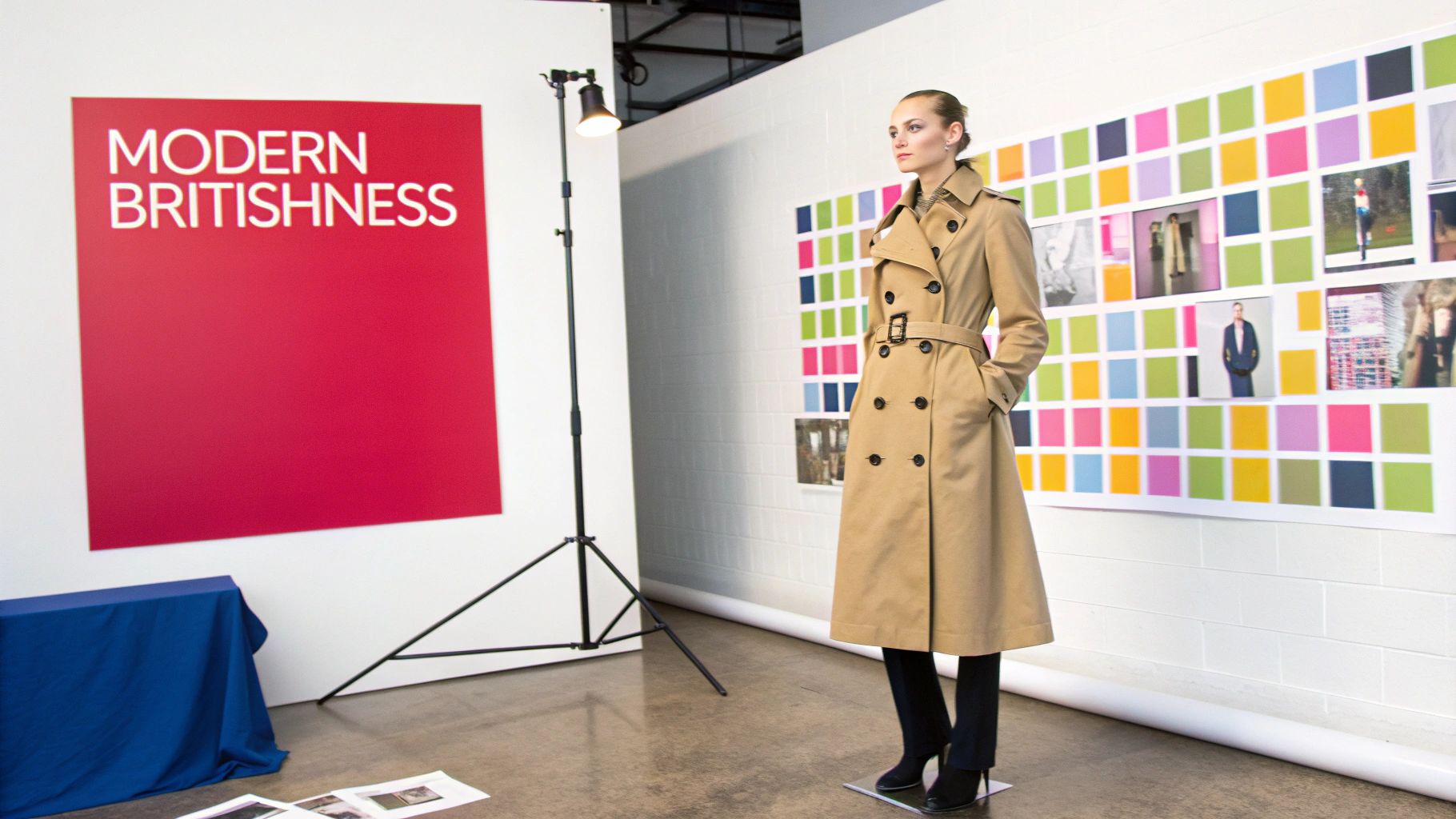
The rebrand was a strategic overhaul focused on repositioning Burberry as the epitome of "modern Britishness." This involved taking back control of its brand identity, significantly reducing licensing, and investing heavily in a digital-first approach. Burberry became one of the first luxury brands to livestream runway shows, build a massive social media following, and integrate technology seamlessly into its retail experience, transforming how a heritage brand connects with a modern, global audience.
Strategic Breakdown and Results
Burberry’s strategy was to make its heritage relevant again by telling its story through modern channels. They celebrated their history of innovation, such as the invention of gabardine fabric, while simultaneously pushing the boundaries of digital fashion. This created a compelling narrative that appealed to both loyal customers and a new, younger demographic.
- Digital-First Innovation: By embracing platforms like Instagram, Snapchat, and live streaming, Burberry met its audience where they were, making luxury fashion more accessible and immediate.
- Heritage as a Storytelling Tool: Instead of just being an "old" brand, Burberry used its history to build an authentic narrative of quality and Britishness, which was woven into its modern marketing.
- Unified Brand Experience: They created a cohesive experience across all touchpoints, from their highly interactive website and social channels to their tech-infused flagship stores.
The results were transformative. The brand regained its luxury status, saw significant revenue growth, and was hailed as a digital leader in the fashion industry. This rebrand proved that even a brand over a century old could become a symbol of modernity and innovation.
Key Takeaways for Your Brand
Burberry’s revival demonstrates how to honour legacy while embracing the future.
Key Insight: A successful rebrand often involves finding the authentic core of your heritage and re-interpreting it for a contemporary audience using modern tools and channels.
To apply these lessons to your brand:
- Marry Tradition with Technology: Don't be afraid to use the latest digital tools to tell your brand’s historic story in a fresh and engaging way.
- Be a Pioneer in Your Niche: Identify where your customers are spending their time online and be the first in your industry to create a meaningful presence there.
- Ensure Brand Consistency: A unified brand image is crucial. Tools like Posterly can help manage and schedule consistent, high-quality content across all your social media platforms.
This case is a powerful example of how a well-executed digital transformation strategy can completely revitalise a brand’s perception and market position.
8 Successful Rebrands Compared
| Case | 🔄 Implementation complexity | ⚡ Resource requirements | 📊 Expected outcomes | 💡 Ideal use cases | ⭐ Key advantages |
|---|---|---|---|---|---|
| Apple — From computer maker to tech lifestyle brand | High — multi-year organisational alignment and design overhaul | Very high — design, product UX, retail, marketing | Premium positioning, brand value jump, market leadership | Companies aiming for premium/lifestyle repositioning | Strong emotional connection, sustainable pricing power |
| Old Spice — Digital native rebrand of heritage brand | Medium — creative campaign plus ongoing content cadence | Moderate — creative agency, social media ops, analytics | Rapid cultural relevance and sales lift among younger cohorts | Heritage brands seeking youth relevancy via content | Viral advocacy and distinct brand voice |
| Domino's — Crisis-driven rebrand with transparency | High — operational reform + honest marketing narrative | Very high — product reformulation, supply, training, marketing | Repaired reputation, regained market share and trust | Brands with product-quality or trust crises | Transparency that converts criticism into credibility |
| Netflix — DVD rental to streaming entertainment | High — product/service pivot and messaging overhaul | Very high — tech platform, content investment, personalisation | Recurring revenue model, market dominance in streaming | Services pivoting from product to subscription models | Scalable subscription economics and data-driven differentiation |
| Uber — Ride-sharing to lifestyle platform | High — multi-service architecture and reputation repair | High — brand, product integration, global rollout costs | Diversification, repositioned brand, investor confidence | Platform businesses expanding services or fixing reputation | Umbrella brand enabling expansion and investor appeal |
| Airbnb — Room rentals to "Belonging Anywhere" | Medium — symbolic brand work + community storytelling | Moderate — branding, community programmes, content | Elevated brand affinity, stronger advocacy, premium perception | Marketplaces and community-first platforms | User-generated storytelling and global emotional appeal |
| IBM — Hardware to services and consulting | High — business-model shift, org restructuring | Very high — talent, sales transformation, thought leadership | Higher-margin services, long-term enterprise partnerships | Legacy product companies moving to services/consulting | Trusted B2B positioning and recurring revenue streams |
| Burberry — Heritage to digital luxury brand | Medium — balance heritage with modern digital systems | High — digital platforms, influencer partnerships, creative | Modernised luxury image, younger affluent audience reach | Luxury/heritage brands needing digital modernisation | Maintains heritage while driving digital desirability |
From Inspiration to Implementation: Your Next Steps in Rebranding
The journey through these successful rebranding examples, from Apple’s seismic shift into a lifestyle ecosystem to Burberry’s fusion of heritage with high-tech luxury, reveals a powerful, unifying truth. A rebrand is never just a cosmetic exercise. It is the external declaration of an internal transformation, a strategic pivot made tangible for the world to see, feel, and experience.
Each case study we've explored illuminates this principle. Domino's didn't just design a new logo; it fundamentally reinvented its product and embraced radical transparency. Old Spice didn't just update its packaging; it redefined its audience and mastered a new, digitally-native voice. Airbnb didn’t just shorten its name; it evolved its mission from providing a mattress to fostering a global sense of belonging. These brands didn't just change their look; they changed their promise.
Synthesising the Blueprint for Success
Across these diverse industries and challenges, a clear blueprint for impactful rebranding emerges. The triumphs of IBM, Netflix, and Uber weren't accidental; they were built on a foundation of core strategic pillars.
- Radical Customer Centricity: The most effective rebrands are not born in a boardroom vacuum. They are a direct response to customer perceptions, needs, and evolving behaviours. Domino's listened to harsh criticism, while Apple anticipated the desires of its future audience. Your brand exists in the minds of your customers, and your rebranding strategy must start there.
- Authenticity as a Non-Negotiable: A rebrand that feels inauthentic is destined to fail. Burberry succeeded by amplifying its heritage, not abandoning it. The new brand must be a genuine reflection of your company's evolved values, mission, and capabilities. It’s not about fabricating a new story, but about learning to tell your true, current story more effectively.
- Strategy Before Aesthetics: The visual identity, the logo, the colour palette, these are the final, crucial outputs of the rebranding process, not the starting point. The 'why' behind the change must be rigorously defined before you ever approach the 'what' and 'how' of creative execution. A powerful strategy is the engine; a beautiful design is the vehicle that delivers it.
Turning Insight into Action: Your Path Forward
Reading about these successful rebranding examples is inspiring, but the real value lies in translating that inspiration into tangible action. Your next steps are not about copying Apple or Old Spice, but about applying their strategic principles to your unique context.
Begin with a fearless internal audit. Ask the tough questions. Has your business model evolved beyond your current brand identity? Have your customers changed? Is there a significant gap between how you see your company and how the market perceives it? This honest assessment is the bedrock upon which a successful transformation is built.
Once you have clarity on your strategic 'why', you can begin to define your new brand narrative. This is where you connect your business goals with an emotional, resonant story that captures your value. A key part of bringing this new narrative to life is ensuring consistency across every single touchpoint, especially on social media where your brand's voice is heard daily.
To achieve this consistency effortlessly, we developed Posterly. It’s a powerful social media management tool designed to help you schedule, publish, and analyse your content, ensuring your new brand message is delivered with precision and impact across all platforms.
The path from an outdated brand to a revitalised one is a formidable journey, but as these examples prove, the rewards are monumental. It's about more than just a new look; it's about unlocking new markets, rebuilding customer trust, and charting a bold new course for your business's future. You have the inspiration, now it’s time for implementation.
Ready to write your brand's next chapter? The team at Grassroots Creative Agency specialises in turning strategic insights into compelling brand transformations that drive real business results, just like the successful rebranding examples you've seen here. Let's build your brand's future together.