

In the bustling digital marketplace, simply being present on social media is no longer sufficient. To cut through the noise and capture attention, brands need precision, efficiency, and deep analytical insight. This is where the right social media tools become indispensable. They are not just for scheduling posts; they are strategic partners that automate critical workflows, deliver powerful audience insights, and ultimately, amplify your brand’s voice into a digital megaphone.
The challenge, however, is the sheer volume of options available. The market is saturated with platforms, each promising to be the ultimate solution. How do you choose between an all-in-one suite and a specialised tool? Which features genuinely move the needle for your business goals, and which are just costly distractions? For instance, selecting tools without first defining your objectives is a common misstep; a clear B2B social media strategy must inform your technology choices, not the other way around.
This comprehensive guide is organised to demystify the landscape and provide clarity. We will dissect a curated list of top-tier platforms, including established players like Sprout Social and innovative solutions like Poster.ly. We go beyond surface-level feature lists, offering a detailed analysis categorised by core strengths: from scheduling and analytics to creative content and community management. Each entry includes screenshots, direct links, and an honest assessment of its pros, cons, and ideal use cases. We provide practical advice on how to build the perfect 'tool stack' for your specific needs, whether you are a solo entrepreneur, a growing SME, or a full-service agency. Let’s find the tools that will transform your social media efforts from a daily chore into a powerful, data-driven growth engine.
1. Poster.ly
Poster.ly positions itself as a streamlined and highly intuitive social media scheduler, making it one of the most accessible social media tools for teams prioritising efficiency over complexity. Developed by the UAE-based Grassroots Creative Agency, its core strength lies in its clean, visual drag-and-drop content calendar, which simplifies the entire planning and publishing process.
This platform is specifically designed for small to medium-sized businesses and marketing agencies that require robust scheduling and approval workflows without the steep learning curve or cost associated with enterprise-level solutions. The user interface is exceptionally straightforward, enabling teams to quickly organise content across channels like Instagram, Facebook, and LinkedIn.
Core Strengths & Use Cases
- Agency-Client Collaboration: The built-in client approval workflow is a standout feature. Agencies can prepare a content calendar and send a secure link to clients for feedback and sign-off, eliminating messy email chains and spreadsheets. This makes it ideal for managing multiple client accounts efficiently.
- Simplified Reporting: Its analytics dashboard focuses on core metrics, providing clear, actionable insights into post performance without overwhelming users with granular data they may not need.
Practical Considerations
While Poster.ly excels at scheduling and planning, it deliberately omits advanced features like in-depth social listening or competitor analysis. It’s a specialised tool, not an all-in-one community management suite.
Our Take: Poster.ly is a perfect fit for businesses in the UAE seeking a powerful, no-fuss scheduler. Its direct connection to a creative agency means its development is guided by real-world marketing needs. To understand how it fits into a broader strategy, you can explore more about this social media scheduler.
- Pricing: Offers an affordable, tiered pricing model suitable for startups and growing businesses.
- Best For: Teams that need a dedicated, easy-to-use tool for content planning, scheduling, and client approvals.
Website: https://poster.ly/
2. Sprout Social
Sprout Social solidifies its position as a premium, all-in-one social media management platform, making it one of the most comprehensive social media tools for mid-market and enterprise-level businesses. Its architecture is built for scale, offering advanced analytics, sophisticated team collaboration features, and robust governance controls that larger organisations require to manage their brand presence effectively.
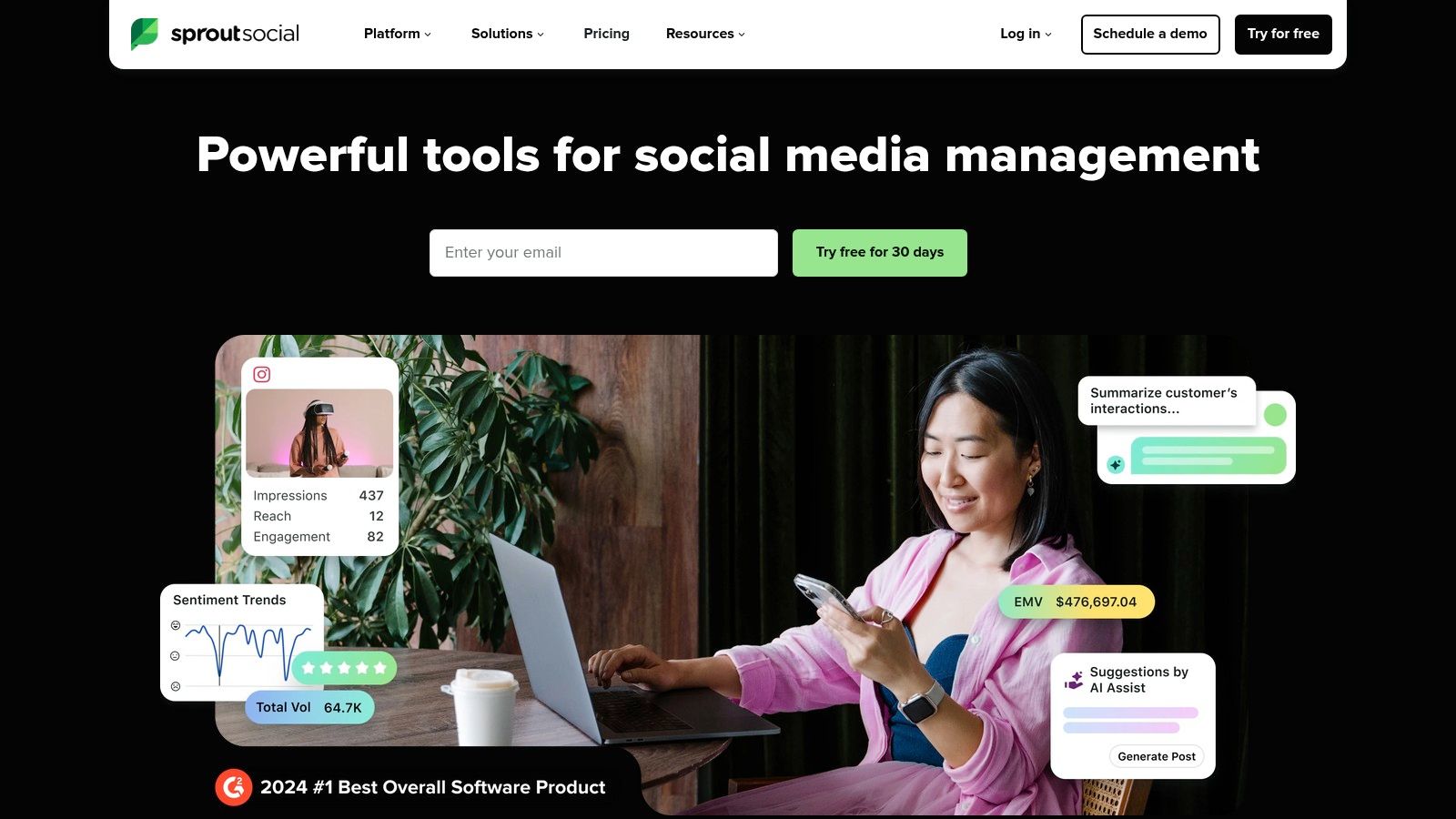
This platform excels at unifying complex social media operations into a single hub. From publishing and engagement via a unified smart inbox to deep-dive reporting and social listening, Sprout Social provides the end-to-end functionality needed for data-driven strategies. Features like Optimal Send Times and AI Assist help teams maximise content impact with less manual effort.
Core Strengths & Use Cases
- Advanced Reporting & Analytics: Sprout Social’s reporting capabilities are best-in-class. It offers highly customisable, presentation-ready reports that are ideal for agencies and in-house teams needing to demonstrate ROI to stakeholders with granular performance data.
- Team Collaboration & Governance: The platform provides powerful permission levels, task assignments, and approval workflows. This is crucial for large teams where multiple users manage brand channels, ensuring message consistency and preventing errors.
Practical Considerations
Sprout Social’s power comes at a premium price. The per-user pricing model can become expensive as teams grow, and some tiers require a mandatory onboarding fee, which adds to the initial investment. It is an enterprise-grade solution, not a lightweight scheduler.
Our Take: Sprout Social is the go-to choice for established businesses needing a powerful, scalable platform with unparalleled reporting and team management features. It is a strategic investment for organisations that view social media as a core business function. To see how such tools fit into a professional strategy, explore our comprehensive social media marketing service.
- Pricing: Premium tiered pricing with a per-user, per-month structure; can be a significant investment.
- Best For: Enterprise and mid-market companies or large agencies that require deep analytics, stringent governance, and advanced collaboration tools.
Website: https://www.sproutsocial.com
3. Buffer
Buffer has established itself as one of the most dependable and user-friendly social media tools on the market, particularly for individuals, creators, and small businesses taking their first steps into structured social media management. Its reputation is built on a clean, uncluttered interface and a simple, queue-based scheduling system that removes complexity from the content publishing process.
The platform offers a straightforward approach to planning and publishing content across major social networks like Instagram, Facebook, X (formerly Twitter), LinkedIn, and Pinterest. It’s an ideal starting point for those who need reliable scheduling and basic performance analytics without the comprehensive, and often costly, features of an enterprise-level suite. The generous free plan makes it highly accessible for new ventures.
Core Strengths & Use Cases
- Intuitive Scheduling Queue: Buffer’s signature feature is its content queue. Users can add posts to a queue and set a predefined posting schedule (e.g., three times a day), and Buffer automatically publishes them at the next available slot. This “set it and forget it” approach is perfect for maintaining a consistent presence with minimal effort.
- Integrated Engagement: The platform includes a simple social inbox, allowing users to reply to comments and engage with their audience directly from one place, which helps streamline community management for small teams.
Practical Considerations
While excellent for scheduling and basic analytics, Buffer’s more advanced features, such as in-depth reporting and social listening, are reserved for higher-tier plans or require separate add-on products. It is primarily a publishing tool, not an all-in-one marketing platform.
Our Take: Buffer is the go-to entry-level tool for anyone needing an affordable and exceptionally easy-to-learn scheduler. Its simplicity is its greatest strength, making it a sustainable choice for small teams. You can see how it compares to other platforms to find the best social media scheduler for your needs.
- Pricing: Features a popular free plan, with paid tiers starting at an affordable price point for individuals and small teams.
- Best For: Solo entrepreneurs, small businesses, and marketers who need a simple, reliable tool for scheduling content and tracking core performance metrics.
Website: https://www.buffer.com
4. Later (by Mavrck)
Later has solidified its position as one of the most visually-driven social media tools, initially gaining popularity for its Instagram-first approach. Now part of Mavrck, it has evolved into a comprehensive platform focused on visual social networks like Instagram, TikTok, and Pinterest, making it ideal for creators, e-commerce brands, and businesses where aesthetics are paramount. Its strength is its visual content calendar, which allows users to see exactly how their feed will look before publishing.

The platform is designed for users who plan their content visually. It simplifies scheduling with features like auto-publishing for various post types and provides a suite of tools to drive traffic and sales, including a customisable link-in-bio page. The integration with Mavrck also introduces powerful creator and brand collaboration capabilities, bridging the gap between content scheduling and influencer marketing.
Core Strengths & Use Cases
- Visual Content Planning: The drag-and-drop visual planner is a standout feature, perfect for brands that need to maintain a specific feed aesthetic on Instagram. It allows for meticulous planning of grid layouts.
- E-commerce Integration: With its Linkin.bio tool, brands can create a clickable, shoppable landing page from their social profiles, tagging products directly in posts and driving traffic to their online store. This is excellent for fashion, beauty, and lifestyle e-commerce businesses.
Practical Considerations
While Later is superb for visual platforms, its functionality for text-heavy networks like LinkedIn or X (formerly Twitter) is less robust than dedicated schedulers. Advanced features like social listening and in-depth competitor analysis are reserved for higher-tier or enterprise plans, and lower-priced plans have post caps.
Our Take: Later is the go-to choice for brands and creators whose strategy lives and dies by visual storytelling. Its intuitive interface for planning Instagram and TikTok content is unmatched, making it a powerful tool for building a visually cohesive brand presence.
- Pricing: Offers a free plan with limitations, followed by tiered paid plans that include AI credits and more advanced features.
- Best For: E-commerce brands, creators, and marketers focused on optimising their Instagram, TikTok, and Pinterest presence.
Website: https://www.later.com
5. SocialPilot
SocialPilot has carved out a significant niche as a cost-effective and powerful scheduling platform, making it one of the most practical social media tools for agencies, freelancers, and small to medium-sized businesses. Its main appeal lies in offering a comprehensive suite of features, including multi-account management and team collaboration, at a price point that is significantly more accessible than many of its premium competitors.
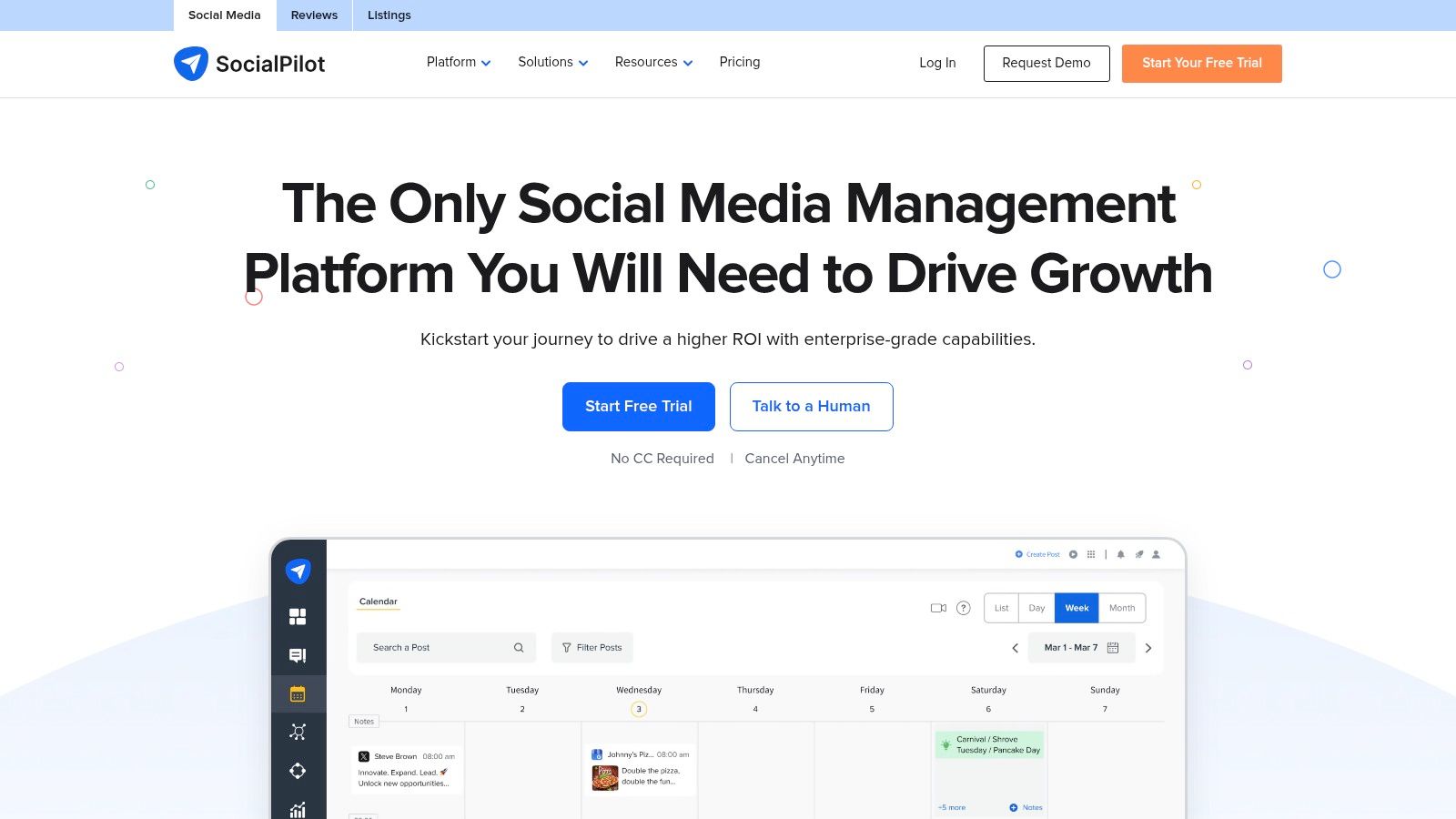
The platform focuses on core scheduling and analytics functionalities, organised within a straightforward user interface that prioritises function over flair. This approach allows teams to manage a high volume of social media accounts without getting bogged down in an overly complex system, making it an excellent choice for scaling operations efficiently.
Core Strengths & Use Cases
- Agency Scalability: SocialPilot excels in environments managing numerous client accounts. Features like bulk scheduling, a unified social inbox, and team member roles with specific permissions allow agencies to streamline their entire content workflow from a single dashboard.
- White-Label Reporting: Higher-tier plans offer white-label analytics reports, enabling agencies to present performance data to clients under their own branding. This adds a layer of professionalism and is a key feature for client-facing businesses aiming to demonstrate value.
Practical Considerations
While its scheduling and reporting capabilities are robust, SocialPilot’s user interface and experience are less polished compared to higher-priced alternatives. Its social listening and advanced engagement features are also more limited, positioning it as a tool for content management rather than deep community engagement.
Our Take: SocialPilot is the go-to choice for agencies and SMBs that need to manage a large number of social accounts on a budget. It delivers exceptional value by focusing on essential, well-executed features that drive efficiency.
- Pricing: Highly competitive tiered pricing based on the number of users and social accounts, with plans suitable for solo entrepreneurs up to large agencies.
- Best For: Marketing agencies, freelancers, and businesses looking for a scalable, budget-friendly solution for scheduling, collaboration, and reporting.
Website: https://www.socialpilot.co
6. Sendible
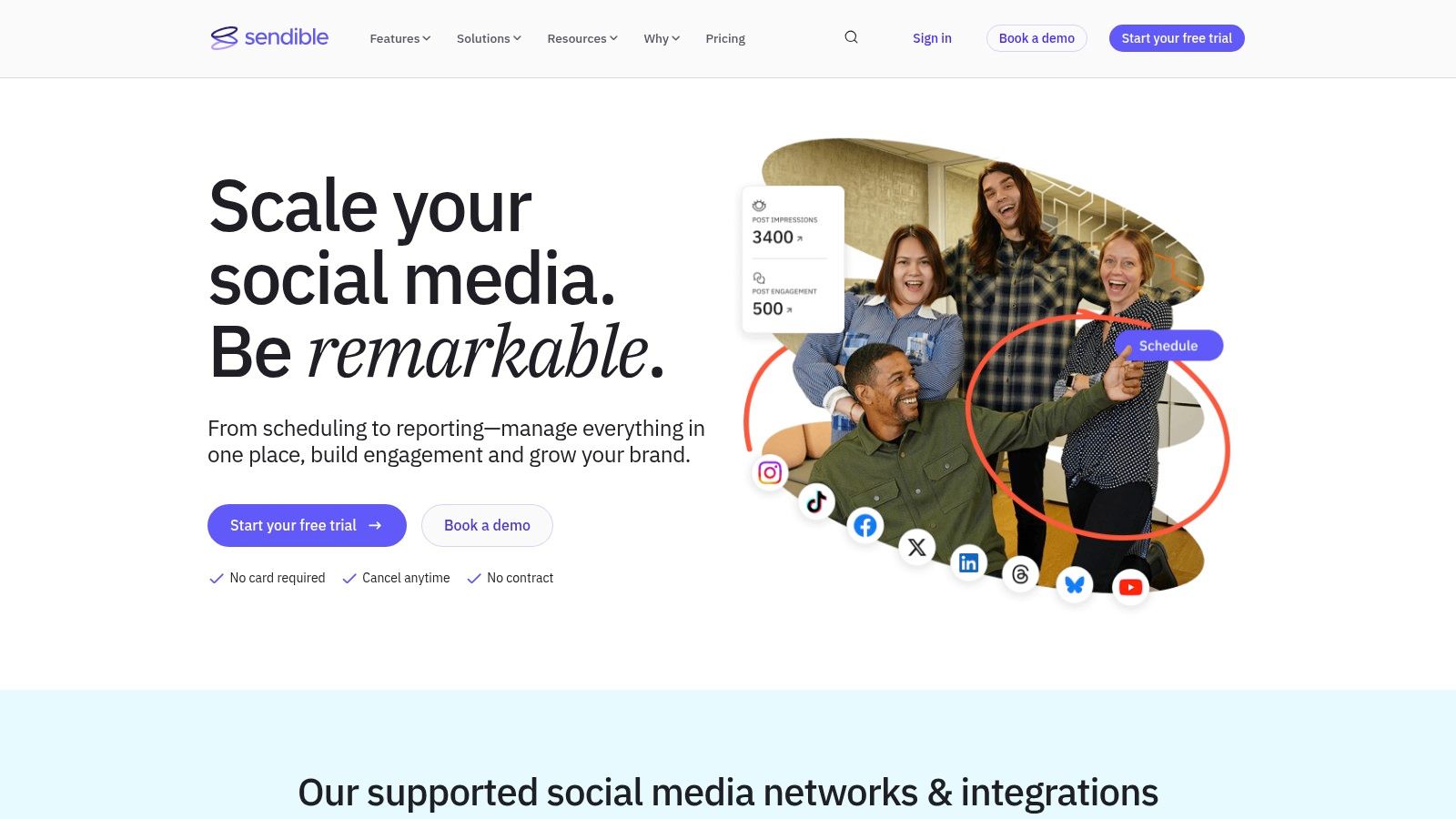
Sendible positions itself as the all-in-one social media management platform built specifically for agencies and brands managing multiple clients. Its primary advantage lies in its comprehensive feature set, combining scheduling, engagement, monitoring, and detailed reporting into a single, cohesive dashboard, making it one of the most versatile social media tools available.
The platform is engineered to streamline agency workflows, offering robust client management features that simplify collaboration and reporting. It allows users to create custom-branded dashboards and reports for each client, providing a professional, white-label experience that enhances an agency's perceived value and keeps all communication organised in one place.
Core Strengths & Use Cases
- Agency-Centric Workflows: Sendible excels at managing multiple client accounts. Features like individual client dashboards, user permissions, and streamlined content approval processes make it ideal for agencies needing to scale their social media services without creating administrative chaos.
- Integrated Reporting: The platform integrates with Google Analytics, allowing agencies to create comprehensive reports that connect social media activity directly to website traffic and conversions. This helps demonstrate tangible ROI to clients, moving beyond simple engagement metrics.
Practical Considerations
While Sendible is incredibly powerful, its support hours are centred around UK business time, which could be a limitation for agencies in different time zones requiring immediate assistance. Additionally, some of its most valuable features, like the full white-label solution, are reserved for higher-tier plans or as add-ons.
Our Take: Sendible is an excellent choice for marketing agencies in the UAE that require a powerful, scalable tool to manage a growing portfolio of clients. Its focus on agency-specific features sets it apart from more generalist schedulers.
- Pricing: Tiered pricing model based on the number of users and profiles, with flexible bundles available.
- Best For: Agencies and marketing teams that need a unified platform for scheduling, engagement, and in-depth client reporting.
Website: https://www.sendible.com
7. Loomly
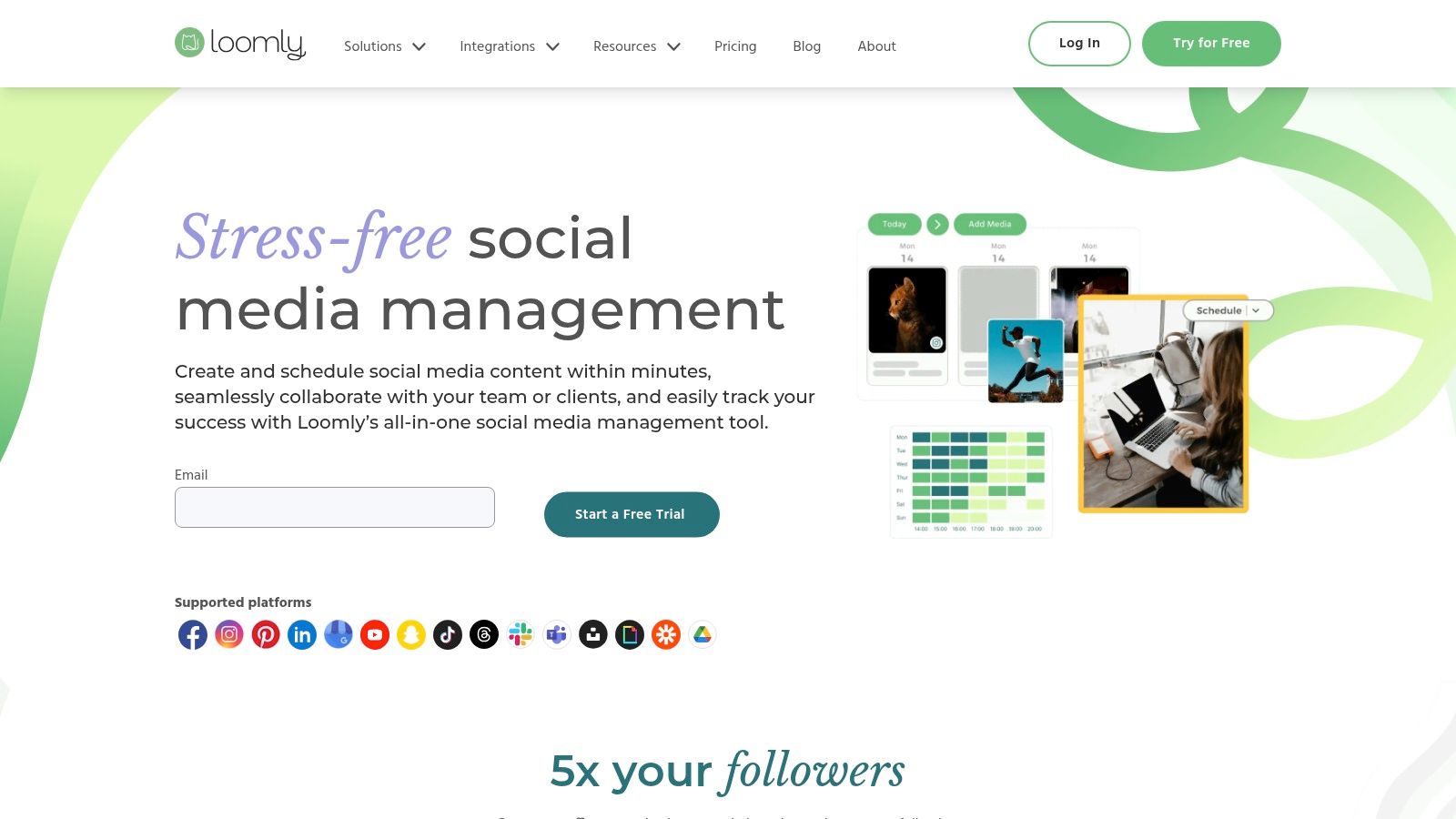
Loomly is a brand success platform that positions itself as a content-first planner, making it one of the most approachable social media tools for teams who need clear, organised workflows. Its strength lies in guiding users from idea to execution with features like post ideas, a central content calendar, and structured approval processes, all housed within an exceptionally clean user interface.
This platform is built for marketing teams and agencies that require collaboration and structure without the technical complexity of more advanced suites. It simplifies content creation by offering suggestions and allowing teams to manage everything from a single, intuitive library, ensuring brand consistency across channels like Facebook, Instagram, X (formerly Twitter), and Pinterest.
Core Strengths & Use Cases
- Team & Client Collaboration: The platform excels with its defined user roles and custom approval workflows. This allows junior marketers, content creators, and senior managers to collaborate seamlessly, ensuring every post is reviewed and signed off before publishing.
- Guided Content Creation: Loomly provides post ideas based on trending topics, holidays, and social media best practices. This feature is invaluable for teams struggling with content ideation, helping to keep their calendars full and their strategy fresh.
Practical Considerations
While its planning and collaboration features are top-tier, Loomly is lighter on deep social listening or advanced community management functionalities. It is a specialised tool focused on the content creation and approval lifecycle, not an all-encompassing social media management solution.
Our Take: Loomly is an excellent choice for teams that prioritise organisation and a structured content creation process. Its user-friendly design empowers non-technical users to contribute effectively. To see how this tool can enhance your planning, you can build an effective social media content strategy.
- Pricing: Offers tiered plans with flexible monthly or annual billing. Non-profit discounts are also available.
- Best For: Marketing teams and agencies needing a straightforward, collaboration-focused tool for content planning, approvals, and scheduling.
Website: https://www.loomly.com
8. Metricool
Metricool establishes itself as a powerhouse for data-driven marketers, blending comprehensive analytics, scheduling, and competitor analysis into an exceptionally affordable package. It stands out among social media tools for its powerful reporting capabilities and an agency-friendly model that makes managing numerous brands incredibly cost-effective. The platform consolidates data from social networks, websites, and ad platforms into a unified dashboard.
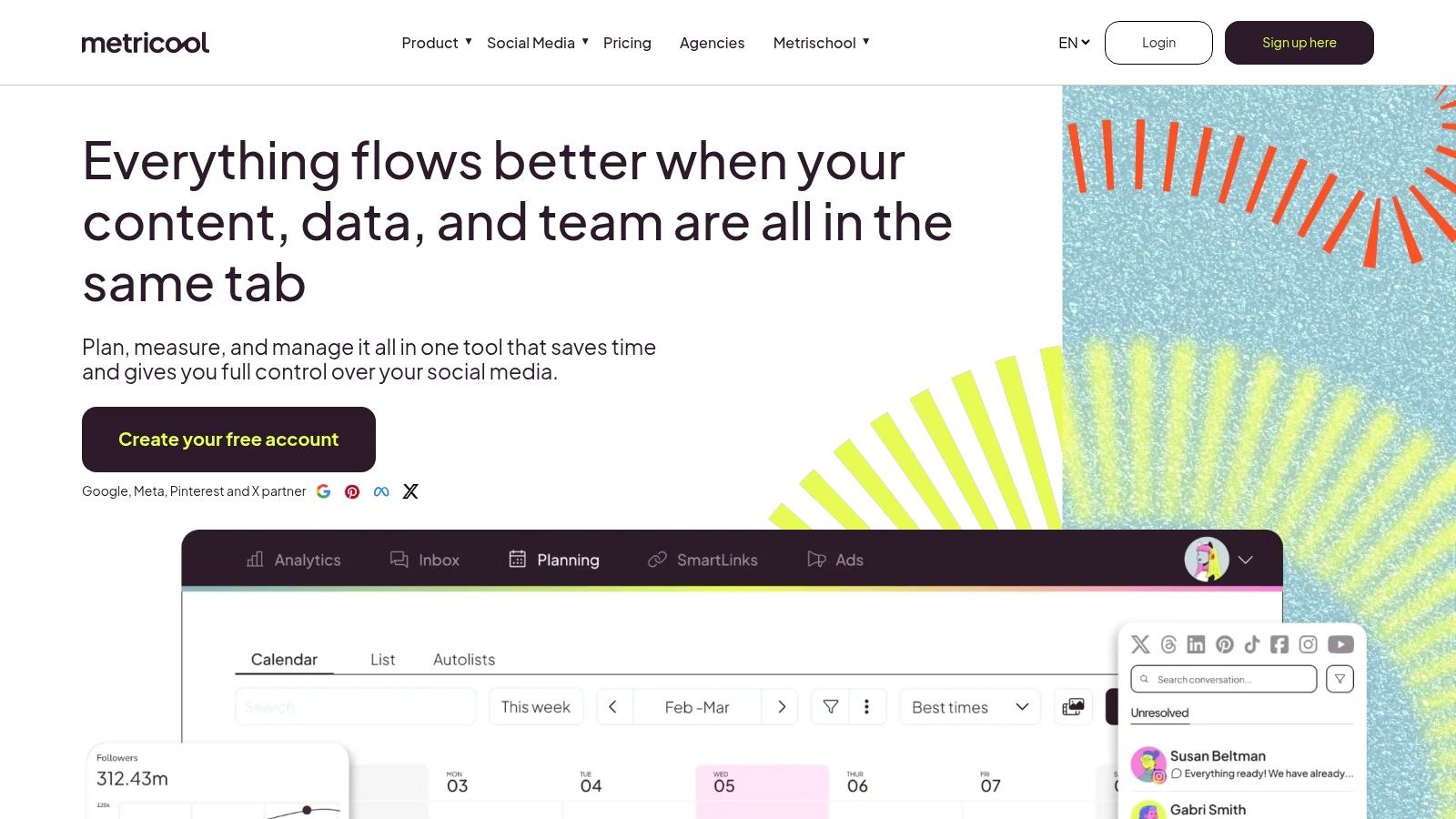
This tool is designed for digital marketing agencies and in-house teams that need to produce detailed performance reports without investing in enterprise-level software. Its strength lies in aggregating historical data and offering advanced integrations, such as a Looker Studio connector, which allows for highly customised and automated reporting workflows.
Core Strengths & Use Cases
- Multi-Brand Reporting: Agencies can generate professional, white-label reports in PDF or PPT formats for each client with ease. The ability to manage dozens of brands under a single, affordable plan is a significant competitive advantage.
- Competitor Benchmarking: The platform allows you to track and analyse competitors' social media performance, providing valuable insights to inform your own content strategy and identify market trends.
- Integrated Ad Management: Metricool centralises the management and analysis of Facebook, Instagram, and Google Ads campaigns alongside organic social data, offering a holistic view of your digital marketing performance.
Practical Considerations
While its feature set is broad, the user interface can feel less polished compared to more premium, design-led platforms. Additionally, some advanced analytics, particularly for X (formerly Twitter), are locked behind paid add-ons, which may be a drawback for teams heavily reliant on that channel.
Our Take: Metricool is the undisputed champion for agencies and data-focused teams on a budget. Its value-for-money is almost unmatched, especially for those who need to generate rich, exportable reports and manage multiple ad accounts efficiently.
- Pricing: Offers a generous free plan and extremely competitive paid tiers that scale affordably per brand.
- Best For: Marketing agencies, freelancers, and businesses needing deep analytics and robust reporting without the high costs.
Website: https://www.metricool.com
9. Agorapulse
Agorapulse has established itself as a comprehensive, all-in-one platform that expertly balances content management with customer engagement. It is one of the most reliable social media tools for teams that need to manage publishing, monitoring, and reporting within a single, unified interface. Its key differentiator is the powerful social inbox, which centralises comments, messages, and mentions across multiple channels.
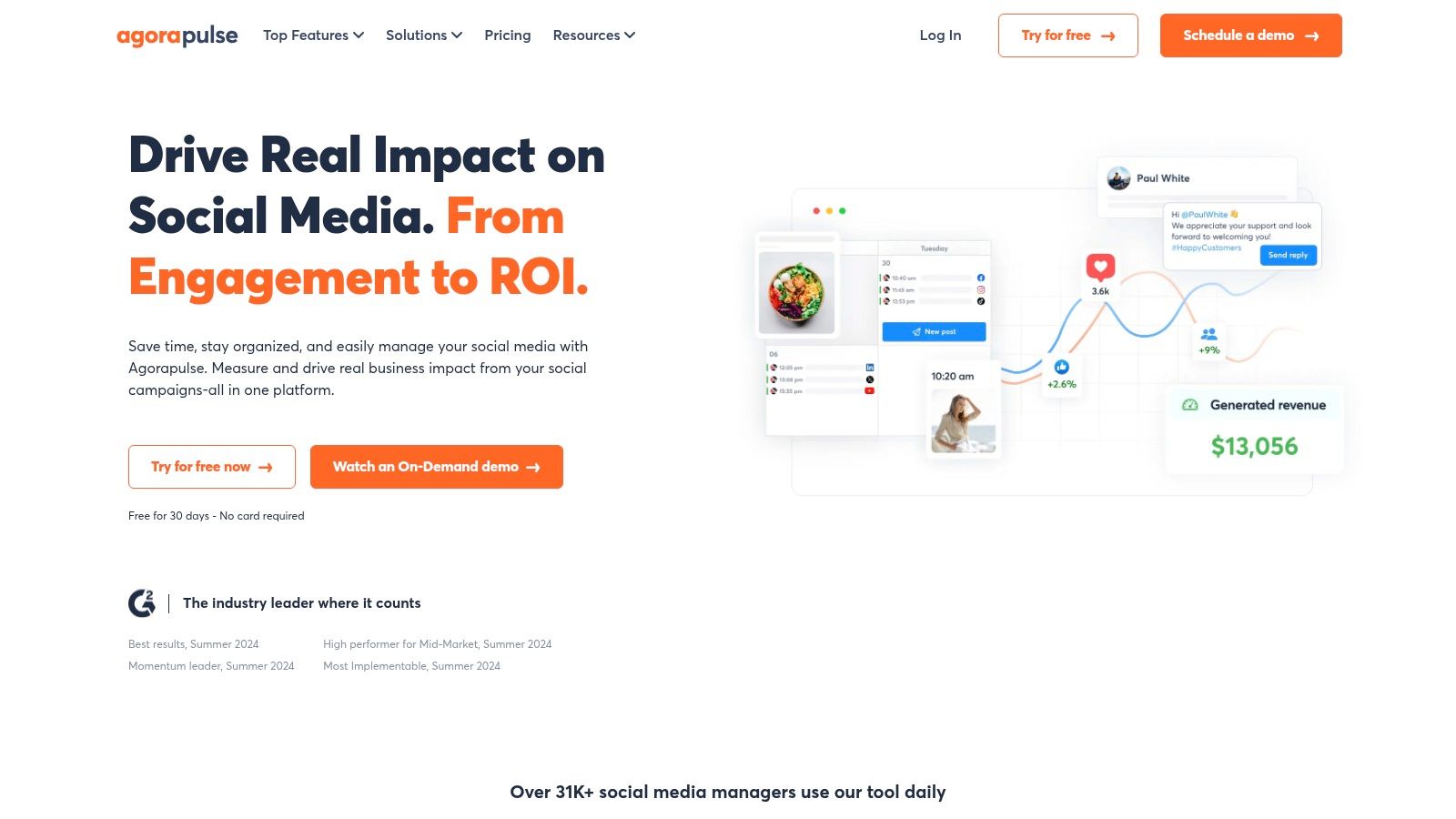
The platform is engineered for marketing teams and agencies that handle high volumes of community interaction and require robust collaboration features. Agorapulse excels at streamlining workflows, allowing users to assign tasks, manage approval processes, and track team performance effectively. It also provides strong monitoring capabilities, including the crucial ability to manage comments on Facebook, Instagram, and LinkedIn ads.
Core Strengths & Use Cases
- Unified Social Inbox: This is Agorapulse’s standout feature. It allows teams to manage all incoming messages, ad comments, and mentions in one place, with automation rules to filter spam and assign conversations. This is invaluable for B2C brands focused on responsive customer service.
- ROI and Reporting: The integration with Google Analytics allows teams to track how social media activities contribute to website traffic and conversions. This makes it easier to demonstrate the tangible business value and ROI of your social media strategy.
Practical Considerations
While its feature set is robust, the per-user pricing model can become costly for larger teams, making it less scalable than some competitors. Furthermore, certain advanced features for X (formerly Twitter), such as in-depth monitoring, are only available as paid add-ons due to changes in API costs.
Our Take: Agorapulse is an excellent choice for businesses that place equal importance on content publishing and community management. Its transparent pricing for add-ons and responsive customer support make it a trusted partner for serious social media teams.
- Pricing: Tiered plans are available, with costs scaling based on the number of users and profiles.
- Best For: Mid-sized businesses and agencies needing a powerful tool to manage high-volume community engagement and prove social media ROI.
Website: https://www.agorapulse.com
10. Brandwatch
Brandwatch stands as an enterprise-grade suite for consumer intelligence, establishing itself as one of the most powerful social media tools for organisations demanding deep market insights. It combines social listening, content marketing, influencer marketing, and social media management into a unified platform, renowned for its vast data coverage and sophisticated analytical capabilities.
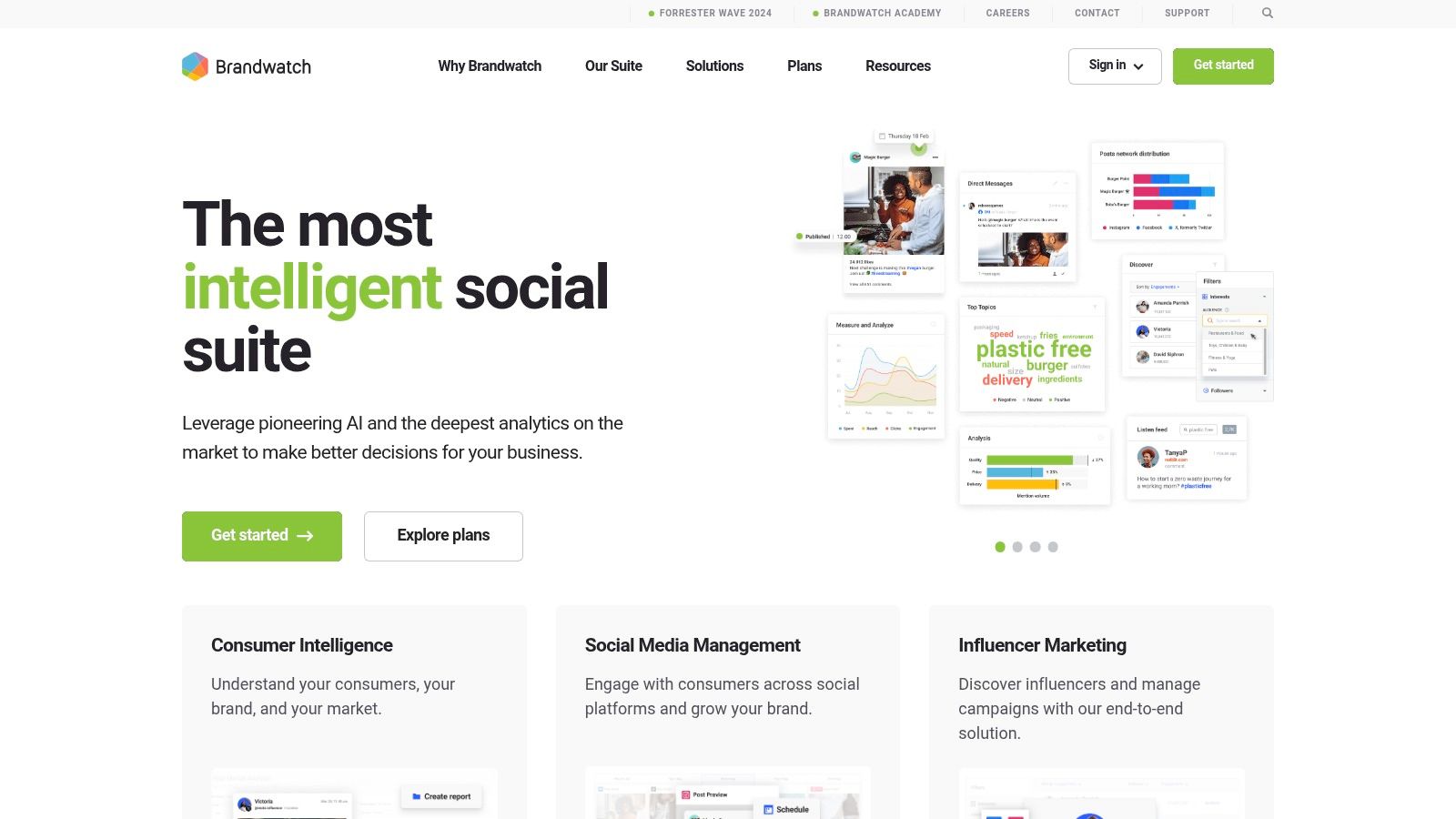
The platform is engineered for large corporations and agencies that need to go beyond surface-level metrics. Brandwatch excels at dissecting millions of online conversations to identify trends, monitor brand health, understand consumer sentiment, and track competitor activity with a high degree of accuracy and granularity. Its deep dashboards and customisable alert systems allow teams to transform raw data into strategic business intelligence.
Core Strengths & Use Cases
- Advanced Social Listening: Its market-leading listening depth is unparalleled. Organisations can use it for crisis management by setting up real-time alerts for negative sentiment spikes, or for product development by analysing consumer conversations about feature requests and pain points.
- Consumer & Market Intelligence: Beyond social media, the platform analyses blogs, forums, and news sites. This makes it ideal for comprehensive market research, helping businesses understand audience demographics, psychographics, and emerging cultural trends before they become mainstream.
Practical Considerations
Brandwatch’s power comes with complexity and a significant price tag, making it overkill for small businesses that only require simple content scheduling. Its extensive feature set demands dedicated team members to manage and interpret the data effectively.
Our Take: Brandwatch is the gold standard for any large organisation in the UAE serious about data-driven decision-making. Its ability to unify social management with deep consumer intelligence provides a holistic view of the market that few other tools can match.
- Pricing: Customised enterprise-level pricing is available only upon request via their sales team.
- Best For: Large enterprises and agencies needing a comprehensive, all-in-one suite for deep social listening, consumer research, and social media management.
Website: https://www.brandwatch.com
11. Zoho Social
Zoho Social is an affordable and powerful social media management platform that stands out for its seamless integration within the wider Zoho business ecosystem. As one of the most cost-effective social media tools available, it provides a comprehensive suite of features for small to medium-sized businesses and agencies already invested in Zoho's other applications, such as Zoho CRM and Zoho Desk.
The platform offers a clean interface for scheduling posts, monitoring conversations, and analysing performance across major social networks. Its core value proposition is unifying social media activities with customer relationship management and support, allowing teams to gain a 360-degree view of their customer interactions. This makes it an incredibly efficient choice for businesses aiming to align their marketing, sales, and service efforts.
Core Strengths & Use Cases
- CRM Integration: The ability to connect social media leads and customer interactions directly to Zoho CRM is a game-changer. Teams can create new leads from social conversations, track engagement history within a contact's profile, and better understand the customer journey. This is ideal for B2B companies focused on social selling and lead generation.
- Agency-Friendly Model: Zoho Social provides an agency-specific plan that allows for easy management of multiple client brands from a single dashboard, complete with custom branding and role-based access for team members and clients.
Practical Considerations
While Zoho Social is exceptionally strong for scheduling and CRM integration, its native analytics and social listening capabilities are more basic compared to specialised, enterprise-level platforms. It's built for efficiency and integration, not for deep, granular data mining.
Our Take: For any business operating within the Zoho ecosystem, Zoho Social is a logical and highly effective choice. It streamlines workflows by connecting social media directly to sales and support functions, eliminating data silos and improving team collaboration.
- Pricing: Offers a free plan and extremely competitive paid tiers, making it accessible for startups and SMBs.
- Best For: Businesses and agencies that use other Zoho products and want a unified platform for social media management, lead generation, and customer support.
Website: https://www.zoho.com/social/
12. Semrush Social Toolkit
Semrush Social Toolkit extends the platform’s renowned SEO and paid search capabilities into the social media sphere, offering a consolidated suite for existing users. It positions itself not just as a scheduler, but as one of the integrated social media tools that leverages wider digital marketing data. Its primary appeal is for teams already embedded in the Semrush ecosystem who want to unify their SEO, content, and social workflows.
The toolkit is designed for digital marketers and agencies who value data-driven insights across multiple channels. By combining social media management with competitive intelligence, it allows users to monitor rivals’ social activities alongside their search rankings, creating a more holistic view of the digital landscape from one central dashboard.
Core Strengths & Use Cases
- Unified Marketing Workflow: The biggest advantage is integration. Teams can research keywords, analyse competitor ad copy, and then schedule social content promoting their blog posts all within the same platform. This is ideal for content marketers aiming to maximise the reach of their SEO efforts.
- Competitive Benchmarking: The Social Tracker feature allows you to directly compare your social performance against competitors on key metrics like audience growth, engagement, and post frequency. This is invaluable for identifying content gaps and strategic opportunities.
Practical Considerations
While powerful as an add-on, its social listening and community management features are less developed than dedicated platforms like Brandwatch or Sprinklr. The limits on connected profiles and tracked competitors in lower-tier plans may also be a constraint for larger agencies.
Our Take: For marketing teams already paying for Semrush, adding the Social Toolkit is a logical and cost-effective step. It streamlines workflows by keeping SEO and social analytics under one roof, providing a powerful data-centric approach to content strategy.
- Pricing: Included in Semrush subscriptions, with more advanced features and higher limits available on Pro and Business tiers.
- Best For: SEO and content marketing teams who want to manage their social media presence without leaving their primary analytics platform.
Website: https://www.semrush.com
Top 12 Social Media Tools Comparison
| Tool | Core features | UX & Quality | Target audience | Value / USP & Price |
|---|---|---|---|---|
| Poster.ly | Visual calendar, scheduling, client approval workflow | ★★★★ — simple, intuitive & clean | 👥 SMBs & agencies | 💰 Low / Competitive · ✨ Client approvals, no-fuss UX |
| Sprout Social | Publishing, unified inbox, reviews, advanced reporting | ★★★★★ — premium reporting & governance | 👥 Mid-market → Enterprise | 💰 High (per-seat) · 🏆 Best-in-class reporting · ✨ Team governance |
| Buffer | Queue scheduling, AI assist, basic→advanced analytics, inbox | ★★★ — simple & easy-to-learn | 👥 Individuals & small teams | 💰 Low / Free tier · ✨ Clean UX, budget-friendly |
| Later (by Mavrck) | Visual planner, auto-publish, link-in-bio, creator tools | ★★★★ — visual-first workflow | 👥 Creators / Instagram & TikTok focus | 💰 Mid · ✨ Creator collaboration & visual calendar |
| SocialPilot | Multi-account scheduling, bulk upload, team approvals, white-label | ★★★ — straightforward & scalable | 👥 Freelancers, SMBs & agencies | 💰Very competitive · ✨ White-label & per-account pricing |
| Sendible | Scheduling, client dashboards, reporting, white-label | ★★★★ — agency-friendly workflows | 👥 Agencies with multi-client needs | 💰 Mid · ✨ Client dashboards & flexible bundles · 🏆 Agency focus |
| Loomly | Content calendar, suggestions, approvals, post previews | ★★★★ — approachable for non-technical teams | 👥 Non-technical teams & small agencies | 💰 Mid · ✨ Simple UX & clear roles |
| Metricool | Scheduling, competitor analysis, long-history analytics, exports | ★★★ — affordable reporting power | 👥 Agencies managing many brands | 💰 Low per brand · ✨ Rich export + integrations |
| Agorapulse | Unified inbox, ad comment mgmt, automation, ROI tracking | ★★★★ — balanced content + care | 👥 Teams needing content + customer care | 💰 Mid · ✨ Balanced feature set · 🏆 Responsive support |
| Brandwatch | Advanced listening, sentiment, influencer discovery, dashboards | ★★★★★ — enterprise-grade insights | 👥 Large enterprises & research teams | 💰 High · 🏆 Market-leading listening · ✨ Deep data dashboards |
| Zoho Social | Scheduling, calendar, basic analytics, Zoho integrations | ★★★ — simple & integrated | 👥 SMBs & Zoho ecosystem users | 💰 Very low · ✨ Smooth Zoho app integration |
| Semrush Social Toolkit | Social Poster, Analytics, Tracker, influencer tools, AI | ★★★★ — research + social consolidation | 👥 SEO/SEM teams using Semrush | 💰 Mid (add-on) · ✨ Consolidates SEO + social · 🏆 AI content tools |
From Tools to Triumphs: Building Your Perfect Social Media Stack
Navigating the expansive landscape of social media tools can feel overwhelming, but as we have explored, the goal is not to find a single, mythical 'best' platform. Instead, the objective is to strategically assemble a bespoke toolkit, or ‘stack’, that is perfectly tailored to your unique business objectives, team structure, and financial resources. The right combination of social media tools acts as a powerful amplifier for your strategy, transforming manual effort into automated efficiency and guesswork into data-driven precision.
Throughout this guide, we have dissected a wide array of platforms, from comprehensive, all-in-one solutions like Sprout Social and Sendible to more specialised powerhouses like Brandwatch for deep listening and Later for visual-first scheduling. The key takeaway is that selection must be strategy-led, not tool-led. Before you commit to a subscription, you must first have a clear answer to the question: “What are we trying to achieve?”
Your Next Steps: From Selection to Implementation
Choosing your tools is just the beginning. The real value is unlocked through thoughtful implementation and integration into your daily workflows. To move forward effectively, consider the following actionable steps:
-
Conduct a Strategic Audit: Revisit your social media goals. Are you focused on lead generation, brand awareness, community engagement, or customer support? Your primary objectives will immediately narrow down your options. A B2B company focused on leads will prioritise different features than an e-commerce brand driving sales through Instagram.
-
Map Your Core Processes: Identify the key tasks your team performs regularly. This includes content creation, scheduling, community management, reporting, and paid ad management. Which of these processes consume the most time? This is where a new tool can provide the highest return on investment.
-
Start with Free Trials: Nearly every tool we have covered offers a free trial or a freemium plan. Use this opportunity to test the user interface, assess the core features, and see how the platform fits with your team’s existing habits. Create a small pilot project to test two or three top contenders in a real-world scenario.
-
Consider Your Ideal Stack: Think in terms of combinations. A startup might build a highly effective and affordable stack using a tool like Metricool for its broad analytics and Poster.ly for its streamlined, user-friendly scheduling capabilities. An agency, however, might pair the powerful client management features of Sendible with the creative prowess of Canva to manage multiple accounts efficiently. Different niches also demand unique tool combinations; for instance, you can explore further insights on building the perfect stack with these essential social media tools for music artists to see how specialised needs dictate tool selection.
The Final Word: Strategy Before Software
Ultimately, the most advanced social media tools on the market are only as effective as the strategy guiding them. A powerful analytics platform is useless without the knowledge to interpret its data, and a top-tier scheduling tool cannot compensate for uninspired content. The true path to social media triumph lies in the synergy between a well-defined strategy and a carefully selected set of tools that bring that strategy to life.
By focusing on your specific needs, testing your options, and integrating your chosen platforms thoughtfully, you can build a social media stack that not only saves time but also delivers tangible, measurable results for your business. The journey from simply managing your social media to truly mastering it begins with this strategic approach.
Feeling ready to build your perfect social media stack but need an expert to guide the strategy? At Grassroots Creative Agency, we specialise in transforming your brand’s digital presence by pairing data-driven strategy with powerful tools like Poster.ly to deliver exceptional results. Contact us today to discover how we can help you turn your social media tools into triumphs.